
Controlling initial force
We consider the force generated when an aligner is first seated.
Clear aligners made stage by stage to each patient's dentition, based on the clinician's diagnosis and treatment plan.
 Korea MFDS GMP-Certified Manufacturing Site
The structure of the aligner itself, the treatment plan and the digital setup are connected in a single flow.
A colorless, clear aligner that is less noticeable in daily life.
Made stage by stage for each patient, based on diagnostic records and the clinician's treatment plan.
Designed with a triple-layer composite material that includes an elastomeric middle layer.
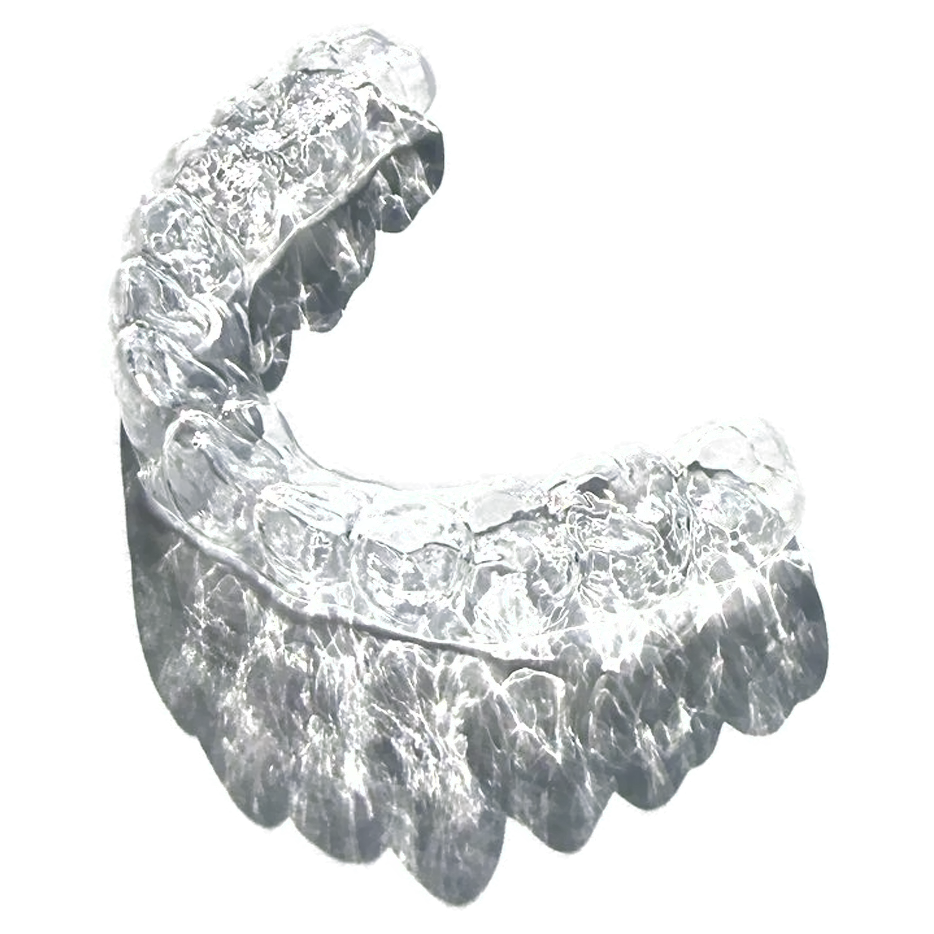
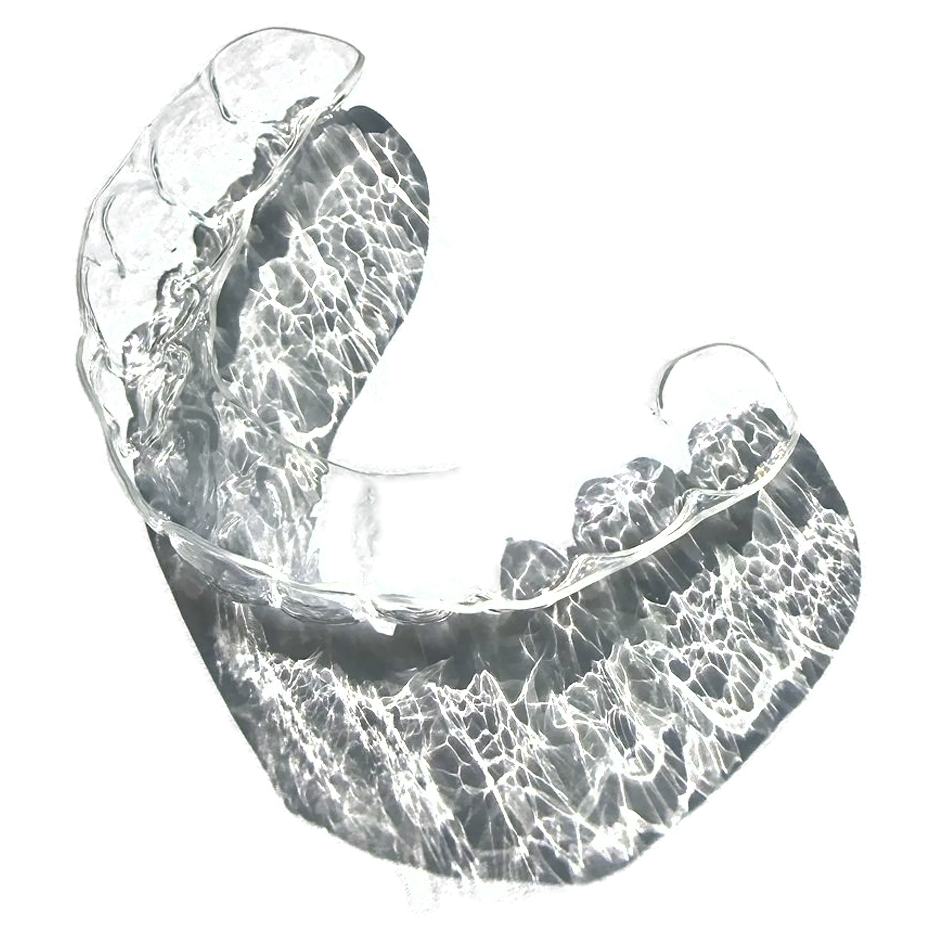
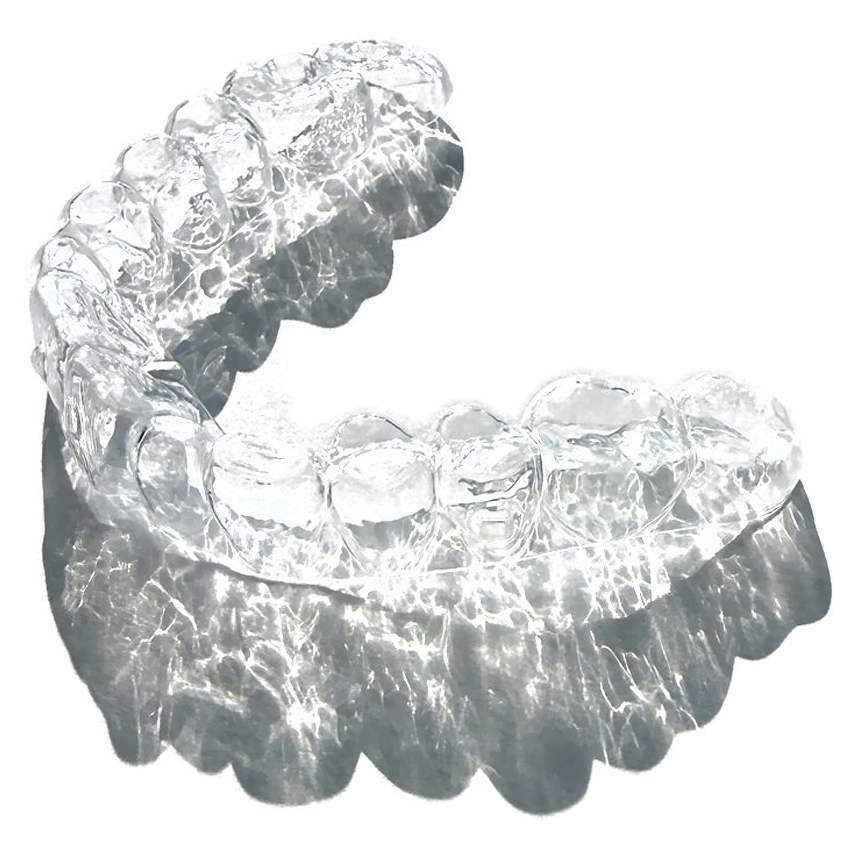
These are actual photos of the same aligner taken from different angles (background removed only). You can see the clear outer form together with the U-shaped inner structure.
Actual appearance may vary with lighting and angle. Aligner design and wear follow the clinician's diagnosis and treatment plan.
By combining shape-supporting layers with an elastomeric middle layer, the aligner's structure and elastic response are considered together.
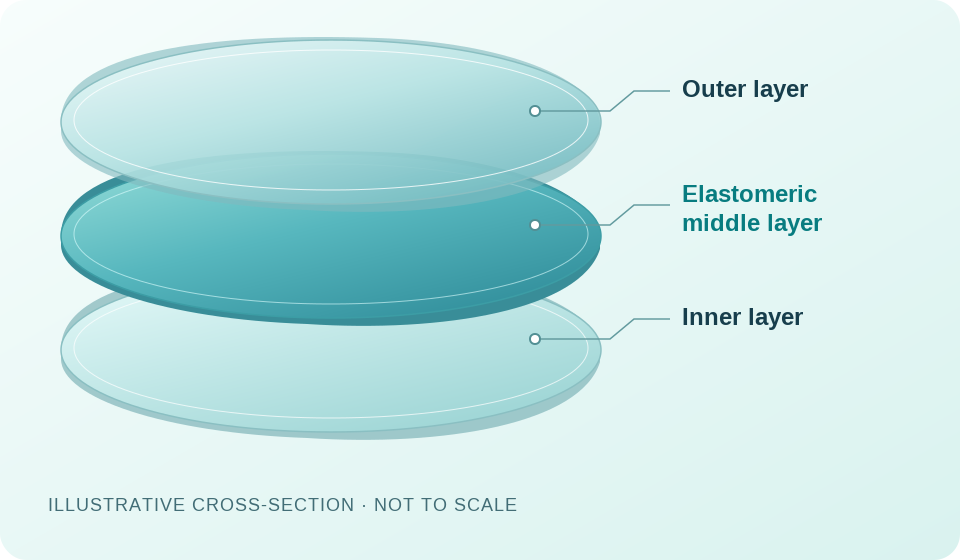
The outer layer that supports the aligner's shape.
The middle layer designed for elastic response.
The inner layer that meets the teeth.
Initial force, change over time, elastic recovery and the treatment plan are considered together.
We consider the force generated when an aligner is first seated.
We consider how stress and force delivery change during wear.
We consider deformation and shape recovery when the aligner is inserted and removed.
Tooth movement must be considered together with staged setups, attachments, wear time and the clinician's judgment.
Comparing the structure of a single-layer material and the Clealign triple-layer composite material.
A structure made of one material layer
A structure made of an outer layer, an elastomeric middle layer and an inner layer
An existing image comparing bending force and an index related to tooth-movement potential (Transposition Potential).
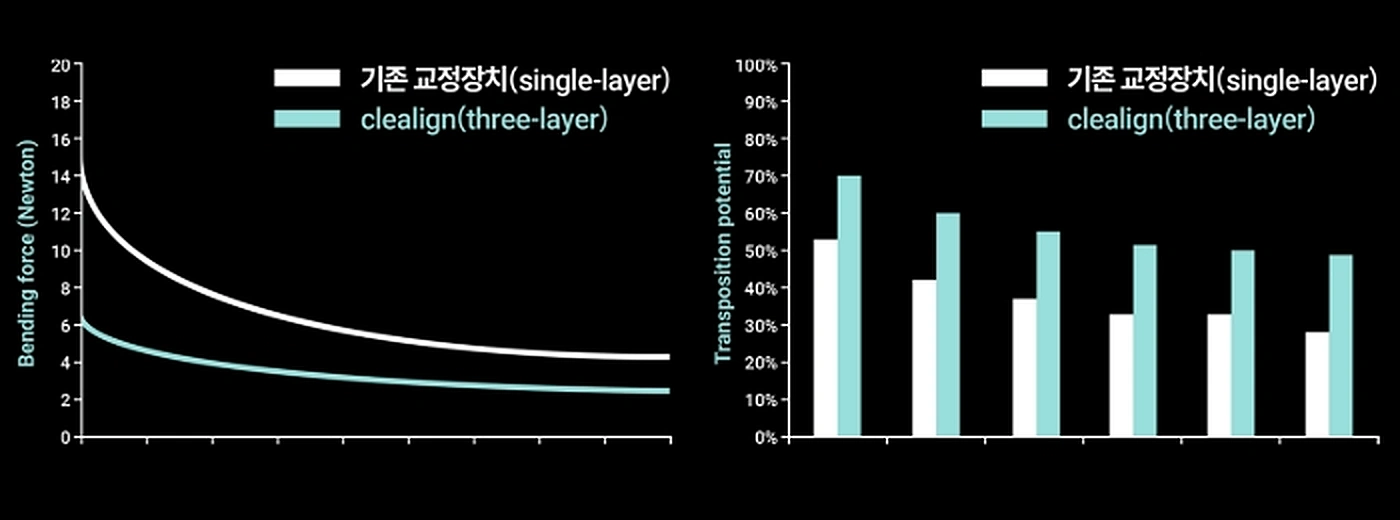
※ This is a restoration of existing introduction material. Until the test source and conditions are confirmed, it cannot be interpreted as evidence of the clinical superiority of Clealign products or of actual tooth-movement results.
Staged aligners and auxiliary design are reviewed based on each patient's scan data and the clinician's prescription. Individual product specifications and supply terms can be confirmed during an adoption consultation.
Final review and approval of the diagnosis and setup are carried out by the treating dentist.
Drafts, revision requests and approval status are tracked in each patient's case.
Aligners are produced, inspected and supplied according to the finally approved plan. Supply and regulatory scope are explained during consultation.
Based on each patient's dentition and the clinician's treatment plan, the setup and aligners are designed with auxiliary elements such as attachments where needed.
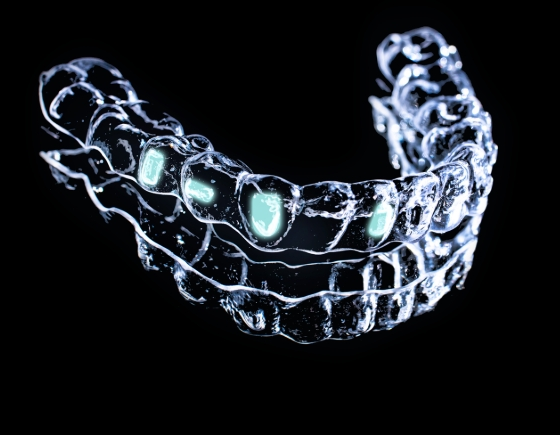
The setup is reviewed against photos, STL, X-ray and the treatment plan, then goes through revision requests and approval before aligner production.
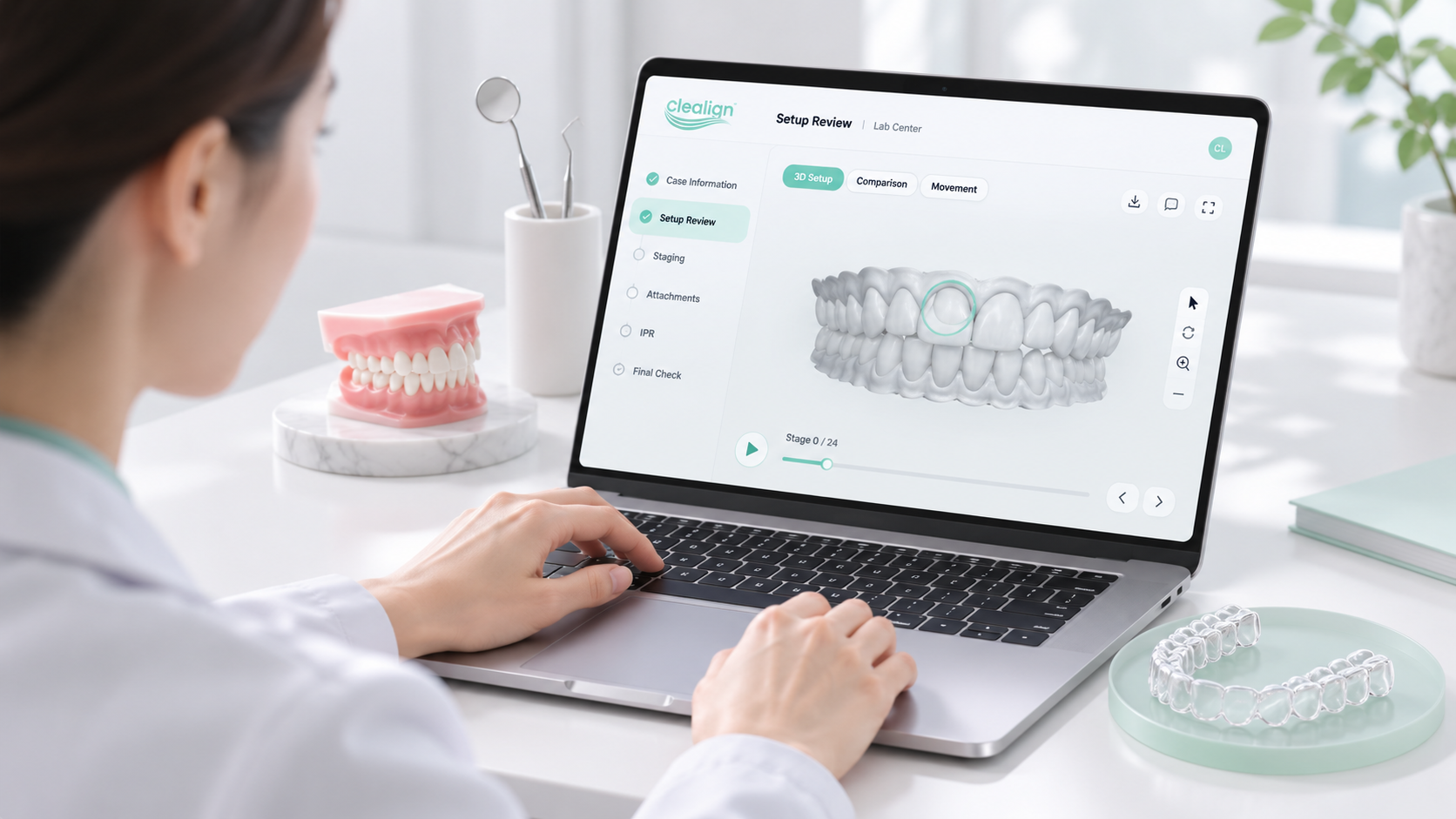
Clinician's diagnosis
Photos, STL, X-ray
Review, revise, approve
Made stage by stage
Shipping & fitting
Managed during treatment
We can connect you for clinic adoption and for international distribution and partnership inquiries.